What Is a Rave? The Real Meaning, History & Culture Explained
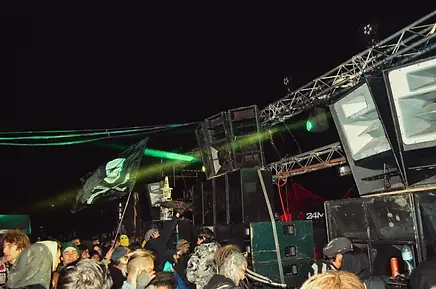
IMAGE: @chakrasammy
What is a rave, really? Discover the true meaning of rave culture, its underground roots, and how it differs from today’s commercial electronic music events.
What Is a Rave? Understanding the True Definition
So, what is a rave?
These days, the word gets thrown around a lot. A big EDM festival? A rave. A themed club night? A rave. A branded party with influencers and VIP tables? Somehow… also a rave.
But historically, a rave meant something more. At its heart, a true rave is a community-led gathering centred around electronic music. It’s built from the ground up — often outside mainstream systems — and driven by shared energy rather than commercial ambition. It’s less about who’s on the lineup and more about what happens between the people on the dance floor.
A traditional rave usually involves:
-
Underground or independent organisation
-
Immersive, high-energy electronic music
-
A strong sense of community
-
Little to no corporate sponsorship
-
Participation instead of passive spectating
The difference matters. When everything becomes a “rave,” the word starts to lose its weight. And rave culture has a history worth protecting.
The Origins of Rave Culture in the Late 1980s
Rave culture exploded in the late 1980s in the UK, heavily inspired by acid house coming out of Chicago and Ibiza. It wasn’t polished. It wasn’t officially licensed. It wasn’t meant to be marketable.
It was raw, loud, and rebellious.
Organisers didn’t book venues. They found empty warehouses, abandoned factories, open fields — anywhere that could hold a sound system and a crowd willing to dance until sunrise.
Finding out about a rave wasn’t too simple. Information spread through:
-
Word of mouth
-
Pirate radio stations
-
Telephone lines
-
Hand-distributed flyers
You usually had to know someone who knew someone. That secrecy added to the excitement. It felt like you were involved in something not meant for everyone.
Illegal Warehouse Parties and the DIY Spirit
Many early raves weren’t technically legal. That tension with authorities strengthened the culture.
Because these events weren’t backed by corporations or venues, everything was DIY. Sound systems were borrowed. Lighting rigs were homemade. Crews pooled money together. Friends helped set up. Everyone contributed in some way.
There were no luxury stages or VIP wristbands. Just speakers, strobe lights, and people moving as one.
That DIY spirit shaped rave culture’s identity. It wasn’t about profit margins. It was about carving out a temporary space where normal rules didn’t apply — a pocket of freedom powered by music.
Community Over Commerce
What truly defined early raves wasn’t just the location or the music — it was the people.
Attendees weren’t treated as customers. They were participants. The event only worked because everyone brought something: energy, creativity, support, presence.
Raves became safe spaces for expression. For many, they offered relief from social pressure, rigid expectations, or everyday routines. People from different backgrounds, classes, and subcultures found common ground on the dance floor.
There was also a form of resistance embedded in the culture. In a world increasingly structured by rules, surveillance, and commercial nightlife, raves represented autonomy.
The fact that authorities tried to shut them down only reinforced their sense of independence.
Rave Music Genres That Shaped the Movement
A rave isn’t tied to one specific sound. Instead, it’s a movement shaped by evolving electronic genres.
Acid House and the Birth of the Scene
Acid house was the spark. Its hypnotic basslines, repetitive rhythms, and trippy synth patterns created a shared, almost trance-like state on the dance floor. The music wasn’t just background noise — it was immersive. Physical. All-encompassing.
The dance floor wasn’t something you observed. It was something you entered, and shared.
Techno, Jungle, Hardcore, and Drum & Bass
As the movement expanded, different styles began to form their own communities. Genres like:
-
Techno
-
Jungle
-
Hardcore
-
Drum and bass
-
Each brought its own energy and atmosphere. Techno was hypnotic and industrial. Jungle and drum & bass injected rapid breakbeats and deep basslines. Hardcore pushed the limits of intensity.
The sounds varied — but the spirit stayed the same: unity, release, passion. No matter the genre, the goal was immersion. You didn’t just listen. You felt it.
Why the Dance Floor Was the Heart of a Rave
Unlike traditional concerts where the focus is on the performer, early raves revolved around collective experience.
The DJ mattered — of course. But they weren’t positioned at the front on a podium. The spotlight wasn’t about performance; it was about atmosphere.
At a rave, you weren’t there to watch. You were there to participate. To move. To lose yourself in the rhythm alongside everyone else.
It was less spectacle, more connection.
Underground vs. Commercial Events: What’s the Difference?
Today, massive electronic music festivals often label themselves as raves. And while they can be incredible experiences, size alone doesn’t define authenticity.
A corporate-sponsored event with branded stages, influencer campaigns, and premium ticket tiers operates differently from the underground raves that built the culture.
That doesn’t automatically make them bad. It just makes them different.
Community-Driven vs. Profit-Driven Events
At the core, the difference comes down to intention. Is the event built primarily to generate revenue? Or is it built to create a space for collective expression?
Modern events often include:
-
Corporate sponsorships
-
Merchandise shops
-
Tiered ticket pricing
-
Influencer marketing campaigns
These features shift the dynamic. The focus leans toward profit, branding, and scale.
Traditional raves, by contrast, were often in direct conflict with mainstream systems. They existed outside official structures — sometimes intentionally so.
Raves were risky. They were shut down. Organisers faced fines. Yet the culture persisted because it wasn’t driven by profit alone — it was fuelled by passion and community.
Presence Over Performance: The Pre-Social Media Era
Early rave culture existed before smartphones changed everything.
There were no Instagram stories.
No TikTok clips.
No livestreams.
You could dance wildly without worrying about ending up online. Less self-awareness. Less performance.
If you were there, you experienced it. If you weren’t, you heard about it later. That temporariness made each event feel special. That freedom created authenticity.
Why the Word “Rave” Still Matters Today
Language shapes perception. Language shapes culture.
When every electronic music event becomes a “rave,” the term gets diluted. Understanding its roots isn’t about gatekeeping — it’s about respect.
Rave culture was built by communities who took risks, created something new, and challenged mainstream nightlife systems. Preserving that meaning honours the people who made it possible.
It reminds us that a rave isn’t defined by branding, scale, or production value.
It’s defined by spirit.
Conclusion: More Than Just a Party
A rave isn’t just a big night out with loud music and flashing lights.
It’s stepping into a space where strangers become a temporary community. Where the bass connects everyone in the room. Where, for a few hours, everyday structures fade into the background.
It isn’t defined by size.
It isn’t defined by profit.
It’s defined by shared energy.
Many events can be amazing. Many festivals can be unforgettable. But a true rave carries something deeper — a collective rhythm built from the ground up.
And that’s what makes it more than just a party.